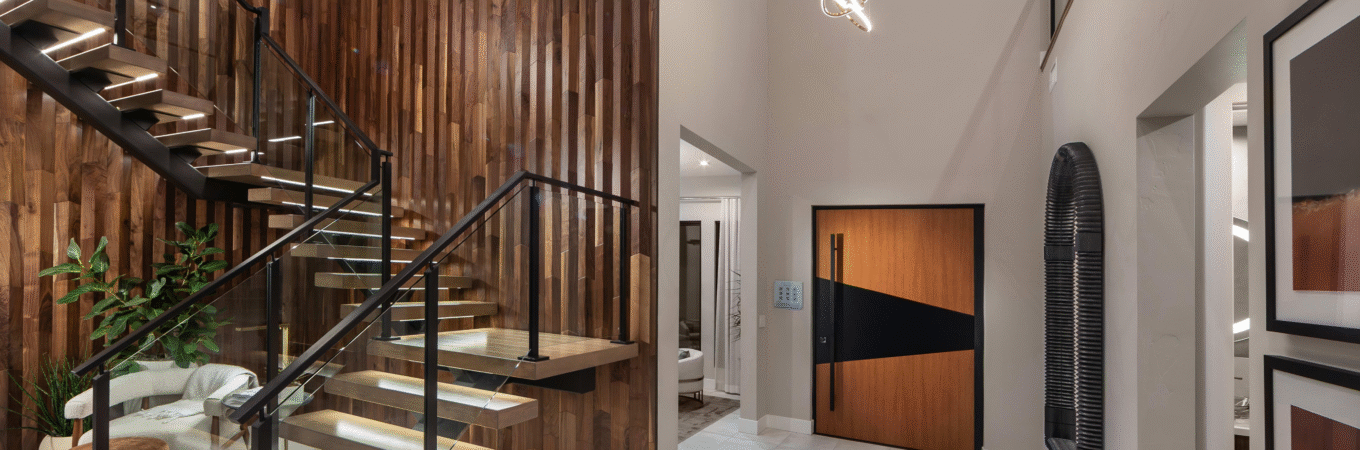
Luxury Duplex Interior Design: What Makes a Two-Level Home Feel Truly Luxurious?
A duplex gives you more space, but more space does not automatically make a home feel luxurious.
When you have two floors to design, there are more things to think about how the floors connect, where the staircase sits visually, how much storage the family needs, what materials will age well and how to make each room feel different without making the home feel disconnected.
Good luxury duplex interior design comes down to getting these details right.
At Joby Joseph Interiors, we have seen that homeowners usually have a clear idea of how they want their home to look. The difficult part is turning that idea into a space that also works comfortably every day. That is where planning, material selection and experience become important.
Start With How the Family Will Use the Home
Before selecting marble, wood finishes or furniture, it is worth spending time on the layout.
A duplex may have a large living room, dining area, bedrooms and family spaces spread across two floors. But the arrangement should be based on the people living there.
For example, a family that regularly entertains guests may want a more formal living and dining area downstairs, while keeping the upper floor quieter and more private.
Another family may prefer a large family lounge upstairs where everyone can spend time together.
There is no fixed formula for a duplex.
The important questions are simple:
- Where does the family spend most of its time?
- How often do guests visit?
- Does anyone work from home?
- Are there elderly family members who may find frequent stair use difficult?
- How much storage is actually required?
- Which rooms need more privacy?
Answering these questions early makes many later design decisions easier.
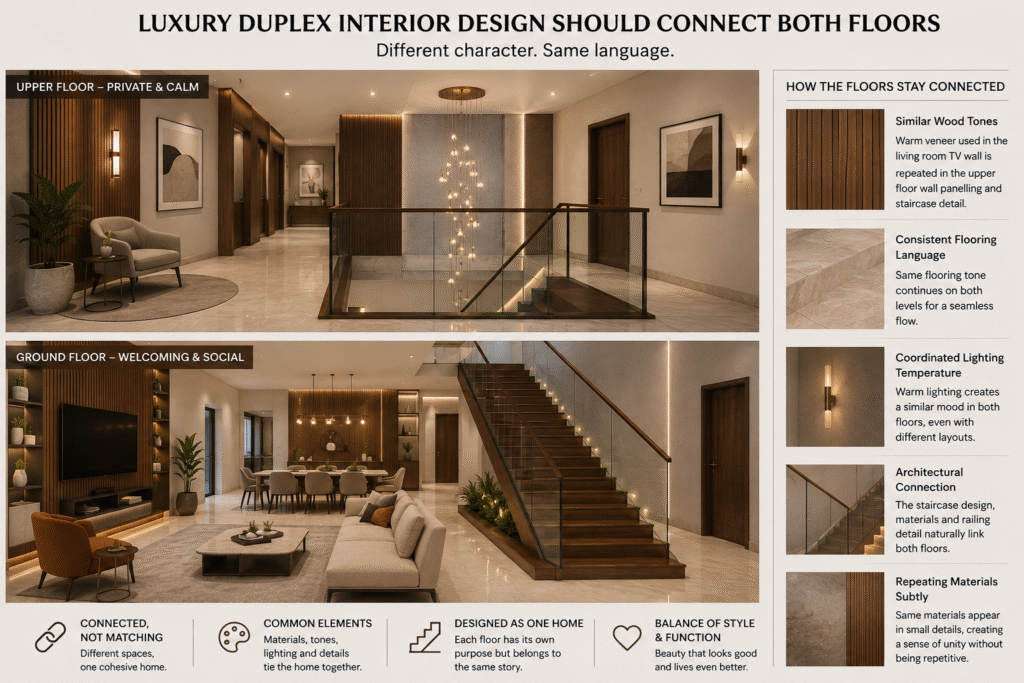
Luxury Duplex Interior Design Should Connect Both Floors
One of the easiest ways to make a duplex feel disjointed is to treat the two floors as completely separate projects.
The upper floor does not need to look exactly like the lower floor. In fact, it is usually better when it doesn’t.
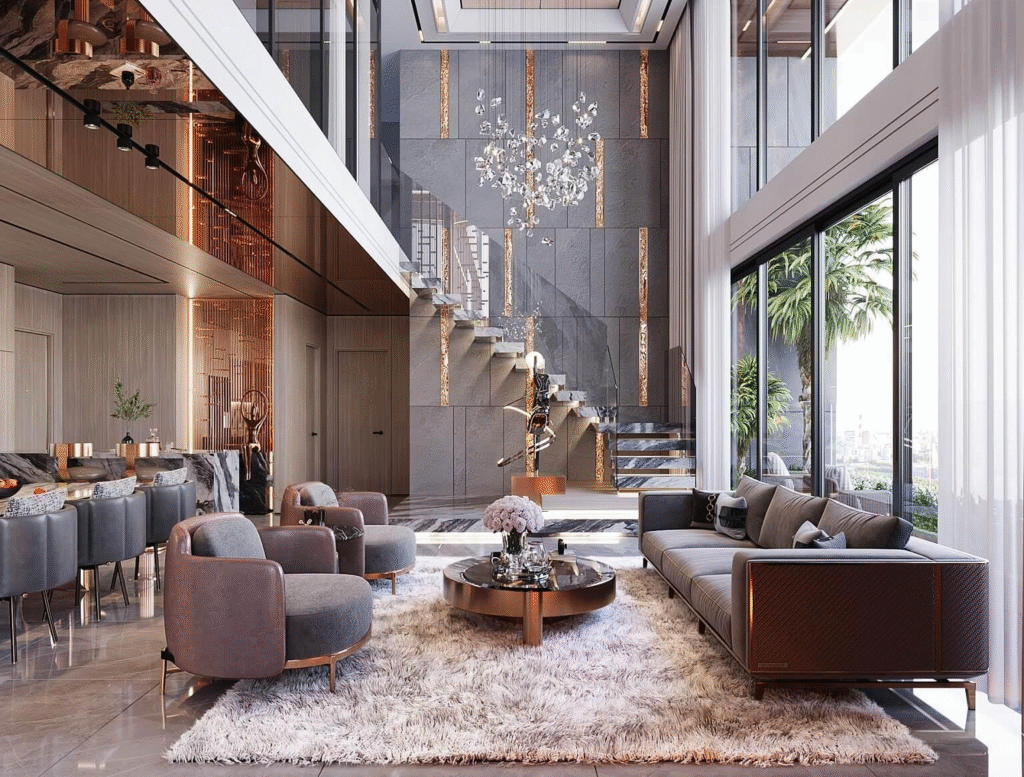
The connection can come through smaller details similar wood tones, flooring, wall finishes, colours, lighting temperature or architectural elements.
For instance, a warm veneer used in the living room can be repeated in a bedroom or staircase detail upstairs. The same material does not have to appear everywhere. A few carefully chosen connections are often enough.
This gives each floor its own character while still making the entire house feel like one home.
The Staircase Deserves More Attention
In a duplex, the staircase is one of the few elements that naturally connects both levels.
It can also become one of the strongest design features in the house.
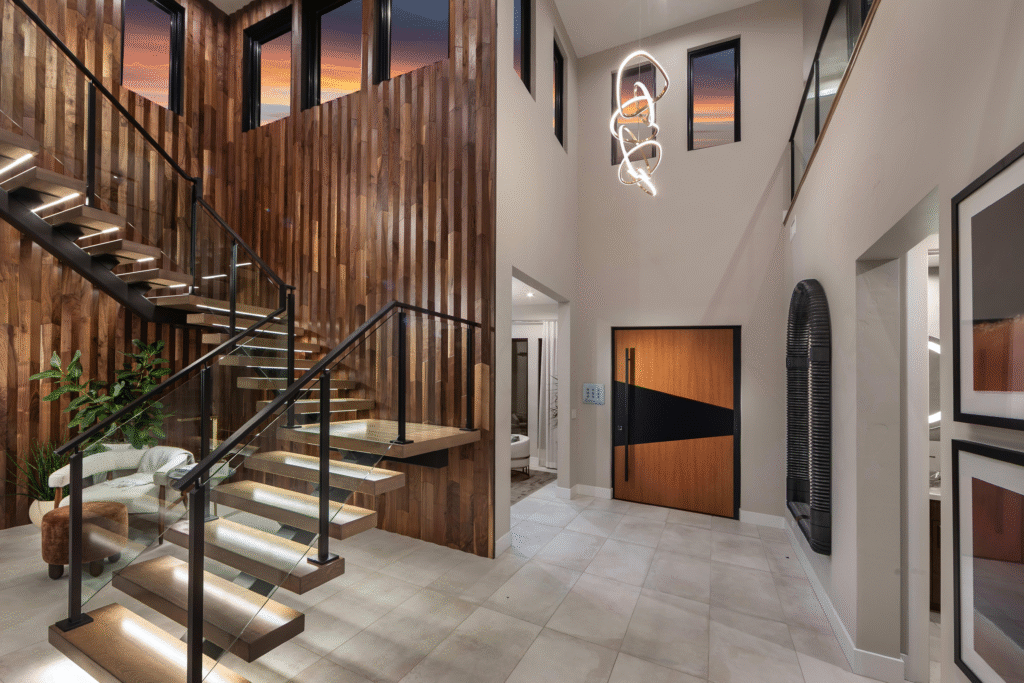
Depending on the architecture, a staircase can combine materials such as:
- Natural stone
- Wood
- Glass
- Metal
- Veneer
- Textured wall finishes
But the staircase should be considered along with the surrounding space.
A beautiful railing will not have much impact if the wall behind it, lighting and flooring have not been planned around it.
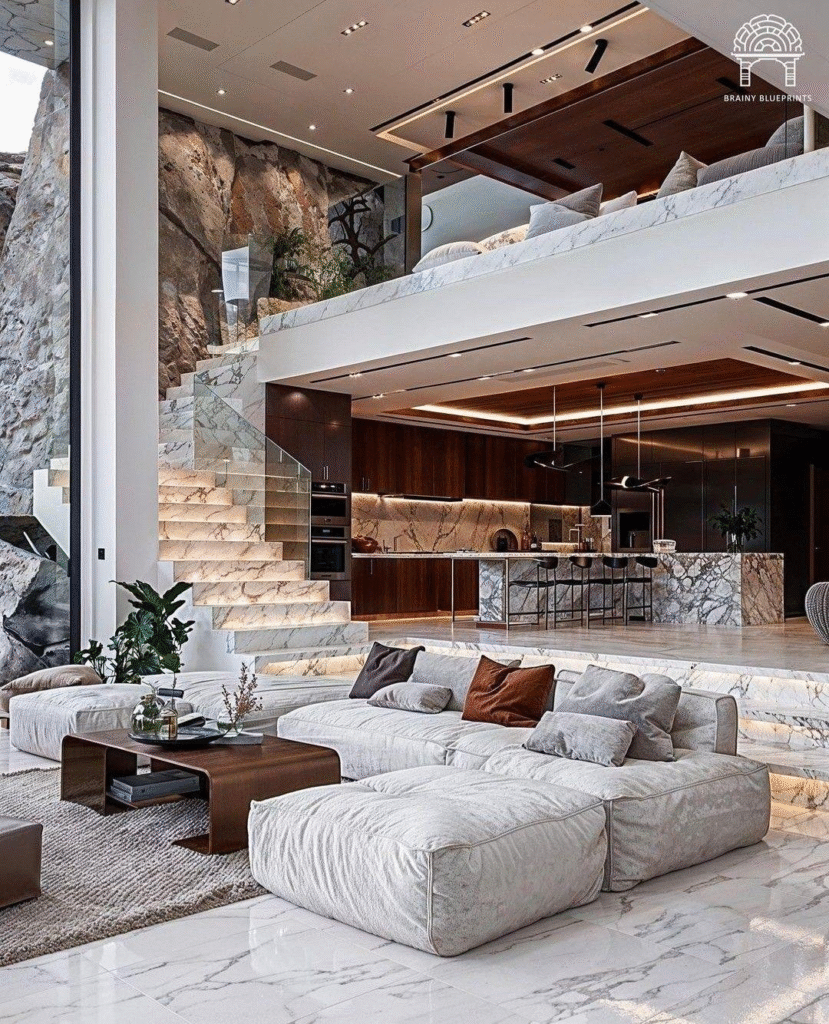
Lighting is particularly important here. A combination of concealed lighting and carefully placed decorative fixtures can highlight the staircase without making it look over-designed.
Choosing Materials for a Luxury Duplex
The materials used in a luxury home need to look good, but appearance is only one part of the decision.
A material that looks beautiful in a showroom may not be suitable for every part of the house.
Consider where it will be used, how often it will be touched, how it will be cleaned and how it is expected to perform over the years.
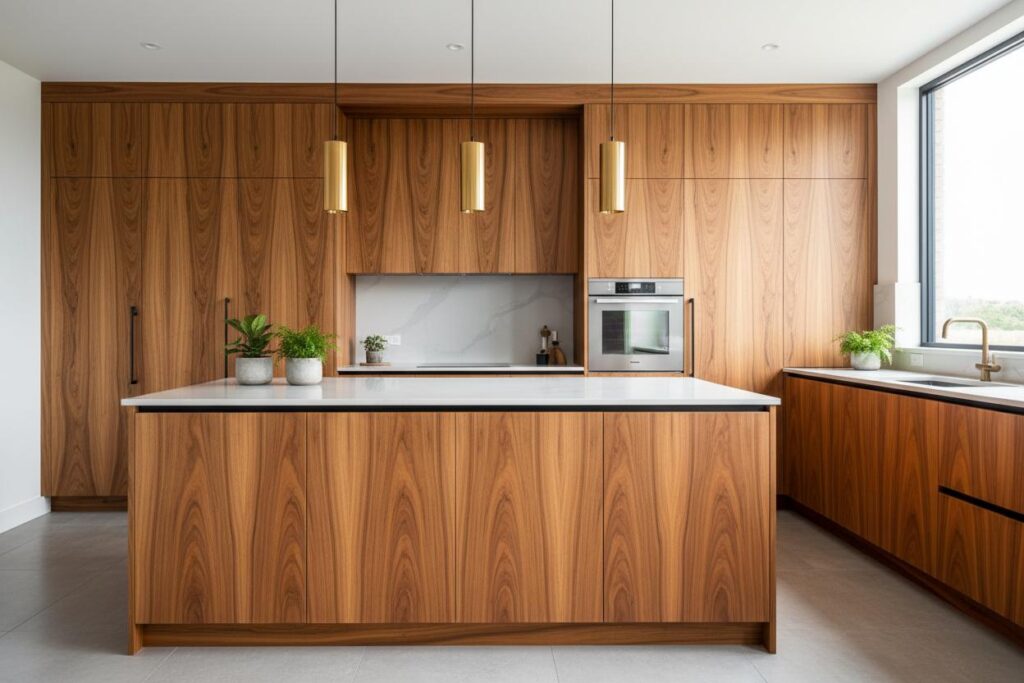
Wood and Veneer – Wood and natural veneer add warmth and depth to a duplex.
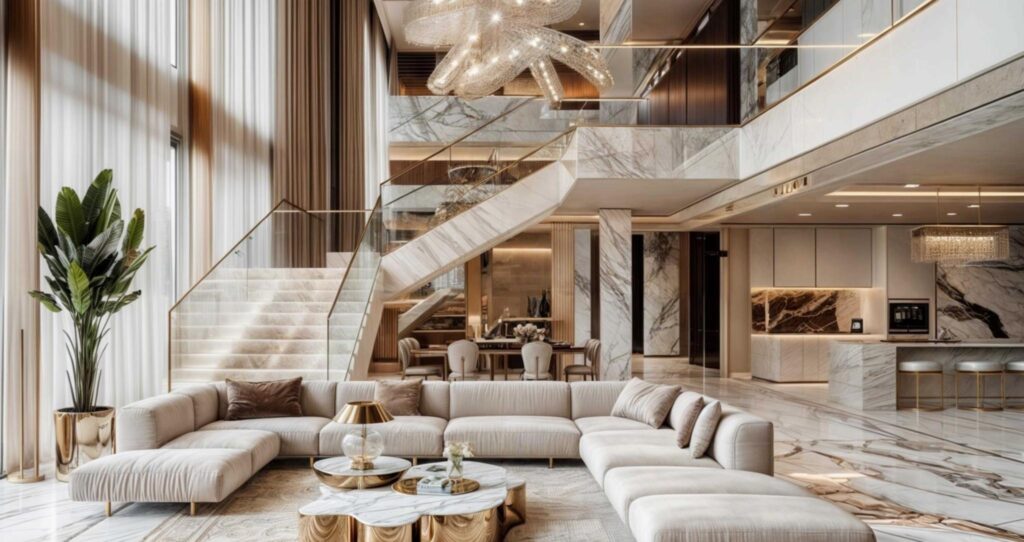
Marble and Natural Stone – Natural stone works beautifully for floors, walls, staircases and bathrooms.
Lighting Should Be Planned Alongside the Interior
Lighting is often left until later, but it should be considered during the design stage.
A duplex generally benefits from different types of lighting rather than one bright source in every room.
For example, the living room may combine general ceiling lighting with wall lights and accent lighting for artwork or architectural features.
In a bedroom, softer lighting around the bed, wardrobe and dressing area can make the room much more comfortable at night.
The colour temperature also matters. Warm lighting can complement wood, stone and neutral finishes, while the wrong light can change how colours and materials appear.
This is particularly important when selecting materials. A wall finish that looks perfect under showroom lighting may look completely different under the lighting installed at home.
Storage Needs to Be Planned Around Real Life
One of the biggest mistakes in luxury homes is making storage an afterthought.
A beautiful bedroom can quickly become cluttered if there isn’t enough space for clothes, shoes, bags, suitcases and everyday belongings.
The same applies to the rest of the house.
Storage may be needed for:
- Linen
- Cleaning supplies
- Appliances
- Documents
- Children’s belongings
- Electronics
- Shoes and accessories
- Seasonal items
The best storage is not necessarily the storage you see.
Well-planned wardrobes, concealed cabinets and utility storage can keep everyday objects out of sight while allowing the main spaces to remain clean.
A Few Things Worth Checking Before Work Begins
Before the project moves into execution, homeowners should have a clear understanding of the materials and work included.
Ask for details about:
| Flooring | Material, thickness and finish |
| Cabinetry | Board/plywood specification |
| Venneer | Type and finishing |
| Hardware | Brand, mechanism and warranty |
| Stone | Actual material and finish |
| Lighting | Fixture type and colour temperature |
| Paint | Brand, finish and application |
| Glass | Thickness and safety specification |
| Electrical | Points, switches and load requirements |
Designing a Duplex That Still Feels Like Home
There is a temptation with large homes to fill every available wall and corner.
But a spacious home needs breathing room.
A large artwork needs enough wall around it. A statement light needs a room where it can be appreciated. A beautiful piece of stone has more impact when it isn’t competing with five other finishes.
The same applies to furniture.
Furniture should be sized according to the room rather than simply choosing the biggest sofa or dining table that fits.
When proportions are right, the home can feel luxurious without constantly trying to prove that it is.
Why Experience Matters in a Luxury Home
A luxury duplex involves a long list of decisions, many of which are easy to overlook when you are looking at a finished photograph.
Material combinations, lighting levels, furniture proportions, storage, electrical planning, staircase details and site execution all affect the final result.
With more than 24 years of experience, Joby Joseph Interiors approaches residential interiors with an understanding of both design and execution.
The aim is not simply to create a home that photographs well. It is to create an interior that feels comfortable when you are actually living in it, when the kitchen is being used, guests are visiting, children are moving around and the wardrobes are being opened every day.
That is where thoughtful planning matters most.
Creating a Duplex You Can Live With for Years
A well-designed duplex does not need to follow every interior trend.
The flooring, cabinetry, stone and other permanent elements should be chosen carefully because changing them later is not easy. Trends can always be introduced through furniture, artwork, fabrics and smaller decorative details.
Start with the way you live.
Then plan the layout, decide where quality matters most, select materials carefully and make sure the details are properly executed.
That approach will give you something much more valuable than a home that simply looks luxurious, it will give you a home that feels right every time you walk through the door.
If you are planning a luxury duplex in Bengaluru, Joby Joseph Interiors can help you develop the interiors around your home’s architecture, your family’s requirements and the level of finish you expect.

Joby Joseph, a renowned luxury interior designer based in Bangalore, India, is the founder of Joby Joseph Interiors with over 24 years of experience in crafting homes that blend beauty, comfort, and cultural depth. His expertise spans luxury hotels, multinational offices, private homes, and celebrity residences, with specialties in luxury home interiors, culturally inspired designs, end-to-end renovations, and handcrafted teakwood furniture. Joby’s design philosophy goes beyond aesthetics, focusing on emotional well-being, thoughtful planning, and a holistic approach that enhances everyday life. Clients admire his passion, creativity, attention to detail, and ability to merge traditional and contemporary elements with precision. Widely regarded as one of Bangalore’s top interior designers, Joby believes true luxury lies not just in visual appeal but in creating meaningful, functional spaces that reflect individual stories and aspirations.

Are We the Right Fit for YourVedic-Inspired Dream Home?